Topics that ruin your working day
Posted: March 6, 2024 Filed under: Brief...therefore witty. | Tags: breakfast, career, Children of Men, Elvis, Film, Humour, lockdown, mood, movies, topics, Weird, work Leave a commentThe holocaust.
Anyway, I woke early one morning at the start of lockdown, frankly enjoying the idea of not having to leave the house.
My son was about one at the time (there weren’t two of him), and I’d become used to waking early for feeding time, as well as to prep for the work commute.
With no need to commute due to that there pandemic, and with my son being coddled by my wife (both still asleep upstairs), I made my way down stairs in my pajamas with the kind of swagger that celebrates not having to do anything as physical as having a ‘spring in my step’ for the rest of the day.
I laid down upon the sofa, kettle boiling, bowl and spoon cornflaking, and skimmed through the DVDs stacked title-out on the bookshelf (why else have a bookshelf, unless needing somewhere else to place your coffee and cornflakes?).
Realising that having woken at 6am meant I had by then just under three hours to somehow put on a clean shirt, move to the office-room and turn my laptop on – I had time to enjoy a movie.
I’ve a good DVD collection. They’re not really for watching, because the films are either a little too intense, or too boring for the rest of the family, or too regularly watched by me over the years because I love them so much.
But one title filled that spot between knowing it’s a cracker of a movie, and not having watched it too recently.
Children of Men.
“Coooool” I would have thought if I actually thought words – which I don’t, but the did still regard the movie, and the premise of watching it with time to spare, before work, as – coooool.
So I put the disk in the player, lowered the volume so as to not wake my Mrs and little son, and watched.
A little under two hours later, I turned off the television, made my way back upstairs, needing to wash my face and put on a clean shirt….and opted to get back into bed.
I reemerged with ten minutes to dress, and turn on my laptop.
Which I did!
And from that point I spent the rest of the day solidly not giving a shit, or anything else helpful or unpleasant to give, to my colleagues, their projects, their workloads or their latest news since coming back from annual leave and having some smashing photos to share from their time in Gibraltar.
The film’s plot, about there being no more children, until there suddenly was one more and it was born into a post-semi-apocalyptic war zone before being sent adrift with its mother towards what might or might not be a friendly boat, had really bummed me out.
How could I reinvigorate myself following so harrowing a tale of constant violence and death at breakfast?
Cornflakes should not be accompanied by shot midwives. CORNFLAKES SHOULD NOT BE ACCOMPANIED BY SHOT MIDWIVES
This ruined the working day for me and frankly the pandemic all went downhill from there (no disrespect intended).
The topics of that film has ruined my working day, but there are others.
And happily, they’re jolly.
Like South Park.
South Park is one of those entities that I forget about and am then delighted to be reminded about because it’s simply excellent. All you’d want from comedy.
I feel like I could do comedy, and if not to the degree of South Park, then at least – slightly. Slightly comedic would be a step in the right direction.
But pondering this means that, again, I am dwelling on topics that are terrible for my deadlines, traumatic for my proofreading, and deadly for my career progression since I realize the career I’m in isn’t the one I want to fucking progress with.
And quickly from there I’m wishing I too was in a post-semi-apocalyptic war zone rather than in this particular Teams online meeting because I’d bet those shot midwives would have a better sense of humour than any of you fuckers.
Fuckers.
Fucking colleagues.
Colleagues!
Before I go, here’s some more work-day ruining topics:
Modern Slavery
Unit 731
Carol Ann Duffy
The Simpsons
7 Dirty Words You Can’t Say On TV
Surprise Military HomeComings
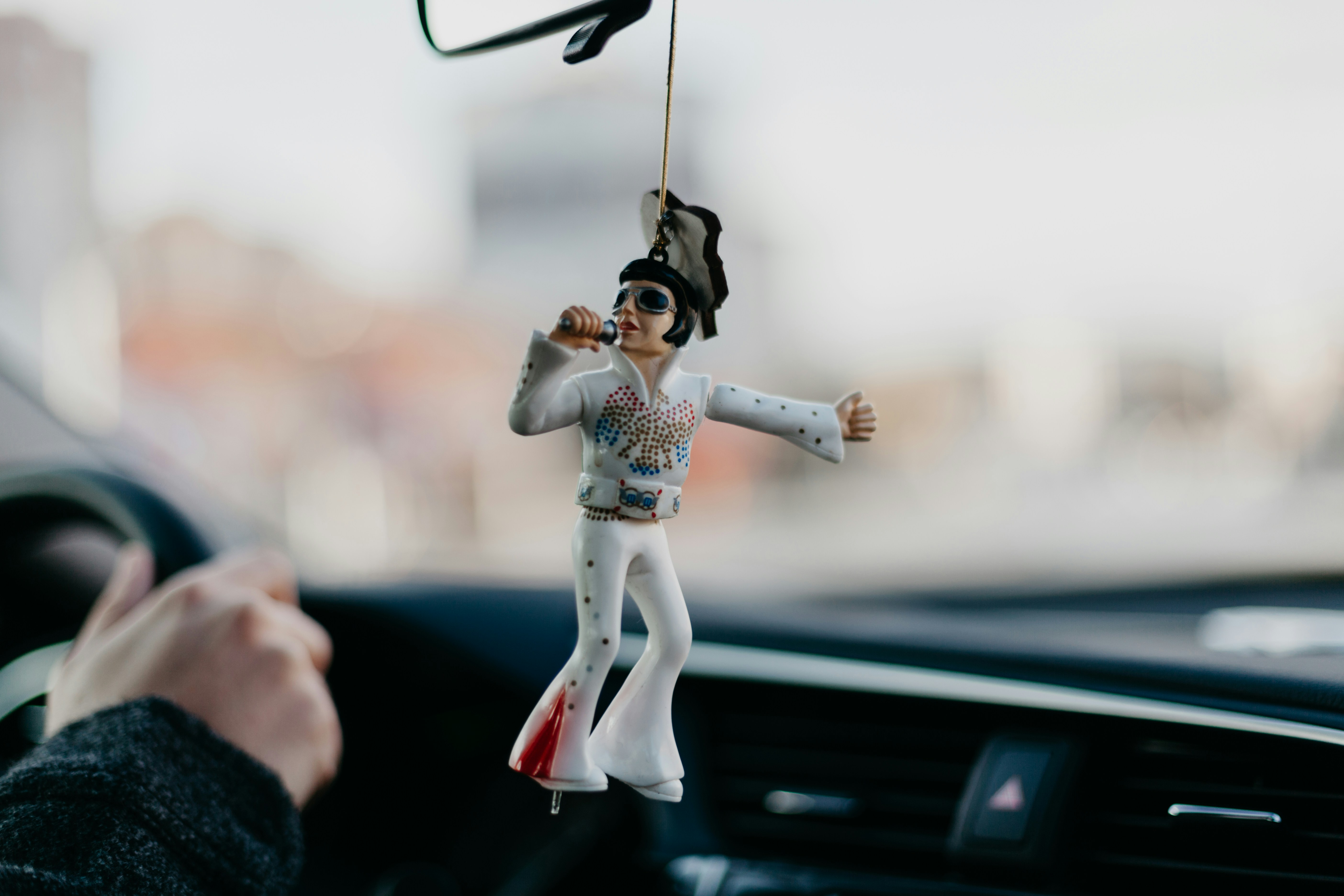
A nice mix there, but one that makes me cry the most is Elvis performing Unchained Melody. Try working on a spreadsheet after watching that stunner.
All the best,
Sam
What to Do With a Problem Like “Ghostbusters”
Posted: July 29, 2016 Filed under: culture, film, writing | Tags: 1984 ghostbusters, 2016 ghostbusters, Culture, Film, Gender, ghostbusters, marketing, sony, writing 1 CommentI was one of those chaps born in 1989, there are a few of us, and being one of those chaps I was perhaps too young to appreciate Ghostbuster when it came out in 1984.
Years later, when I was essentially an adult, I watched it again and found it to be…not that great.
The humour was a little meagre for my tastes, and the nerd/slacker focus was a tad uninspiring too. However, I found the creativity of the film, in ripping open the subject matter of nerds/slackers meet ghosts/history/NYC/paying the rent was tremendous; and this is the essence of the original Ghostbusters that the remake should have harnessed, rather than a mere brand name.
The film has received nastiness, nastiness inspired by revenge.
People are angry, but why so angry? Crappy films and crappier re-makes have been made and re-made before.
What’s the issue here?
Here’s the issue here.
Hurting Those Who Gave the Original Film the Prestige Sony’s Cashing in On
If you fuck with a cult film, you’re going to hurt people on an individual level if you don’t have the best intentions.
For a cult film to become so, like Ghostbusters, it requires that audience member to put a degree of themselves into their passion for it, in the same way anyone comes to love any project of theirs. So when someone (Sony) takes it and twists it, not for the better, you’re taking and warping a degree of that individual and in many cases it is their childhood or loner-hood.
Films can go from neglected to beloved by the power of the many individuals who come to love it and espouse its qualities and worth; best example being “The Big Lebowski” (my favourite).
The women and men currently in their 30s, those for whom “Ghostbusters” holds nostalgic and personal value, are smarting from not only the poor quality of the film but more so because now Sony has done it to them.
Want to know why they’re pissed off? Google “Ghostbusters” – see what comes up.
The Gender Issue
It wasn’t an issue.
It was an issue for one group only.
Sony.
The audience didn’t care that it starred women, only the studio did. You can’t take a beloved film and have 1 new addition, otherwise it is simply cashing in on the former’s reputation.
“Ghostbusters…This Time With Women!” didn’t need to be made. The studio’s highlighting that this time it’s got women as stars is not a selling point – it shouldn’t matter if it is men or women starring; gender of the cast should not be a selling point.
Doing this only goes to offend the nostalgia fans, the feminist movement and the audience at large because it’s meagre and a pointless transformation.
Gender should not be a selling point and the studio have insisted to the contrary.
By all means, make a film starring solely women, but don’t try to make that the reason we should go and see it. That’s shoddy marketing and an insult to us all.
The best intentions for a film like this should be that you wish to go by the old mantra: similar but different.
You’ll want to modernise the film in terms of what will gain 21st century audience attention span along with 21C humour, whilst also keeping the essence of the original.
In this case study, Sony did not have the best intentions and sought only to cash in on the brand name’s prestige and inject minimal creative additions: gender (ir)relevance and crappy 21C fad humour.
Awkwardness is not funny, as the abysmal yet sadly typical trailer demonstrates.
Just look at the work of the great comic Sasha Baron Cohen, who’s “Borat” and “Bruno” exemplified tremendously that awkwardness is an eventuality – not an objective – of comedy. If it doesn’t come from a funny premise, it is merely awkward and that’s not worth anyone’s time. Cohen’s characters always came from a humorous premise and this is why the films were funny, whilst their hallmarks of awkwardness were an eventuality – not the objective and not the selling point.
The Victims
Something to be born in mind here are those involved who are not to blame for Sony’s actions.
A good cast of actors, each with a promising future and dedication to their craft have been hoodwinked into believing this is going to be a quality product and have likely given this project their all, as have all those many names in the final credits of the production.
You can only do what you can do with a shitty script, poor direction and production, especially with an awful overseer in Sony.
They don’t deserve hate.
Given better projects, they’ll likely shine and we should wish them all well.
They will have learnt this bitter lesson.
Sony will probably do this again, as will other studios.
What to Do Now
Well, if you liked the original Ghostbusters, watch it again, laugh and remember, alone or with buddies.
The original film, or rather the “Good Ghostbusters” hasn’t gone anywhere.
It’s still there in all its 1984 glory.
So be sure your kids see that one first, and perhaps see what you can do to get the “Good Ghostbusters” higher in the Google rankings.
Go see the next Melissa McCarthy film, the next Paul Feig picture and even the next Sony release.
The might be good, might be horrendous, might be great. You’ll never know unless you go see it and give it a chance. If it’s rubbish; go home and watch the “Good Ghostbusters” again.
Let it fade into obscurity, just as this film shall, and relax.
Everything’s ok.
Jeez, I don’t like either of them anyway.
Sam
The Evolution of the Vampire in Culture.
Posted: January 2, 2013 Filed under: Uncategorized | Tags: Culture, Film, Humour, Literature, Opinion, Twilight, Vampires Leave a commentBefore we look at Vampires in culture, we have to realise that literature is not inspired only by other literature, for in the culture of our time- a book can be inspired by a film, and a film can be inspired by the preceding culture. Nothing wrong with that. That’s how things have always been, essentially. Stephenie Meyer (‘Twilight’ author) herself states that she wrote the series whilst seeing it in her head as though it was a movie.
However, the first vampire of the screen, and perhaps one of the more horrific, was the ultimate and grotesque ‘Nosferatu’- a terrifying and silent presence that was the immediate benchmark for scaring the good grief out of people in the audiences around the globe. This was Vampirism’s, and indeed Horror’s, most remembered early film pieces.
But let’s go right back to the beginning of vampires in literature. Not so far back as to take note that they were born from the mythology of a people telling tales of unholy beast-like things, but I guess I’ve just done that, so we’ll carry on into literature.
This is important, owing to where the genre of vampire fiction has ended up, particularly considering Twilight. Lord Byron, of literature, mythology and the side of a can of ‘Relentless’, is considered to have been the inspiration for the original vampire of literature- ‘The Vampyre’ specifically, making the nocturnal neck biters an utter ink-incarnation of romanticism. Unbearably beautiful, withdrawn and brooding, moonlight-pale (ironically owing to ‘cure’ of blood-letting), the panache vampire was short-lived in popular culture, till something similar rose from the pit in the form of that iconic identity; and it had a cape.
This is the vision of a vampire indulged in by the Halloween-ers each October, the standard of Vampirism: slick hair, cape, fangs and, of course, pale. This is all thanks to the hugely popular cultural offering of Bram Stoker. And so from there, Vampires have become an aspect present as a character or metaphor in mass culture, rather than mere mythology.
Here, the evolution to ‘Twilight’ becomes clearer in its roots, but it is still a great leap from the evil and emotionless character drawing blood from the throat of a (typically) white-dressed virgin on a cold night in an alleyway, all the way to the high-school setting being the transformed castle of a misfit that no-one can possibly understand and isn’t good at sports.
By this, I am referring to the manner in which the teen-drama has penetrated the genre like nothing else has ever been, even to the extent of spawning near-identical television series such as ‘True-Blood’ and ‘Vampire Diaries’. Though all these share the same teen-focus that fuels them, and makes the box-office intake immense. It is the latter point that is most important here, as its box-office success is of such substance owing to the inspiration it received from movies.
Take, for example, ‘Lost Boys’, in which pretty boys go through the trials of teenage life, avoiding social situations and stakes. Modernised. Appealing to the young. A perfect breeding ground for what would follow a few decades later.
But why teenagers? Thinking led me to the revelation that the link between the vampire and teenagers is what might be the most blatant aspect of them both. Nothing can ‘brood’ quite like a teenager. The need to stand out/away from the crowd of people being ‘pathetically’ happy is in abundance with the teenage population of every population. The premise of the idea is that most teenagers actually have no reason to be outside of the norm- they are very average owing to being essentially still children and therefore rather dull- the opportunity to escape from the awkward reality of adolescence and for an hour and half just pretend that there is a good reason to be moody is…bliss.
And this, noticed by the regrettably talented people that write and produce these new vampire stories, is only too easy to achieve, particularly when this idea is twinned with another of being able to have a beautiful cottage for absolutely no reason (see the latest ‘Twilight’ movie.
But ultimately, I must note that the reason that Vampire literature and films are the way they are is owing to very simple key business equation. Find the audience that is similar, or make the product similar. And now here we are. But it’s not a bad thing- as the culture is simply extending, though more for profitable reasons that artistic, but then the greatest films and books of all time wouldn’t have been made if they hadn’t had an invested interest.
So now we have Twilight, enjoyed by millions, but as well as this we have another aspect added to the culture. We now have something to mock, hate, and hold as a standard of what we don’t appreciate in culture. If it weren’t for this we wouldn’t have a low-point to keep ourselves from.
I’m not going to watch it again though; no matter how much she wants to.
 The Lateral Column